It was fifteen years ago—my daughter was about to turn one in just a few days—when I realized that my grandmother had dementia. I went home to Milwaukee to visit my family over the long holiday weekend, and my mother warned me, “Your grandmother is starting to repeat herself, I believe she is showing beginning signs of dementia.” Sure enough, in the course of a one-hour conversation, she asked me the same question—something about the ceiling fans—at least a dozen times. I didn’t think too much about it then. I wasn’t familiar with dementia, and I was a little removed from my grandmother’s everyday life. But my mother, as the weeks and months went by, kept me updated about what was going on with my grandmother—her denial about her condition, her reluctance to receive help, and her renewed tendency to cuss people out.
It wasn’t too long before I started to notice the changes in my grandmother myself. Our phone conversations drastically changed. And when I visited her in person, she just no longer seemed like her grandmotherly self. I wondered whether she remembered who I was, whether she remembered who her children were. But as I reflected on these questions, a sense of guilt overtook me—I had always promised to transcribe the story about her life. Living with dementia, that didn’t seem like it could ever be a possibility. And so, I started to write down the limited details she had given me, looked through photo albums and other archival material for missing information, and filled in the rest with context clues based on where and when she was living. This work produced Incomplete Stories: On Loss, Love, and Hope (2021, 2023), a text I consider to be the beginning of the memory and archival work I would engage in over the years that followed.
The text initially came out in August 2021, a little over a year after my grandmother passed away. Unfortunately, by the time it was released, my mother also started showing signs of dementia. I was devastated. She was so much younger than my grandmother and, to me, still had so much life left in her. In the midst of the grieving and caretaking, however, I learned something—I had to capture the stories I could from her while I still had the chance. I interviewed her about her gardening practice, something that brought her great joy. And I listened as she recounted details about things I surely thought she had forgotten. Whenever I returned home, which was often, I began to collect photo albums and other artifacts before she either lost them or destroyed them. Which was a good idea on my part because right before she transitioned into a long-term group home, she completely ransacked her apartment in a state of paranoia and confusion.

Now entrusted with her old possessions—art, jewelry, photos, Bibles—I initially wondered what I should do with them. I didn’t wonder for long and dedicated a wall in my dining room to her belongings that I inherited, combining them with other pictures and artifacts that I collected over the years.
It was the formalization, or rather, organization of this collection that encouraged me to name what I had been doing for years: memory and archival work focused on my family narratives. Yes, I had written Incomplete Stories, interviewed my mother and other family members after my grandmother’s passing, and was even collecting and organizing my mother’s belongings that held value in my eyes. But long before I did this, I was engaging in this work—collecting photos and obituaries, organizing personal writing from my teenage years through adulthood, holding on to blankets, handmade dolls, tapestry, jewelry, sacred texts, figurines and more gifted to me in my childhood. When I started collecting and preserving these things decades ago, I had no language for what I was doing. But over the years I understood something that changed the way I do and name my work: I am continuing the legacy of Black people who have committed to the task of writing down and preserving our memory.
We have always been our own archivists.
We have preserved photographs, letters, journals, recipes, oral histories, church programs, family Bibles, and memories passed from one generation to the next. Many of us have been doing archival work all along without naming it as such, and without formal training around what we were doing—we simply did what our hearts instructed us to do. We’ve done it understanding that we couldn’t count on public institutions like museums and libraries to value what we have valued or to get our narratives right without extraction or appropriation. We’ve done it understanding that the only time we have to do this work is now. And yet, this moment simply calls us to deepen those practices with greater intention, skill, and care.
Aya Collective Publishing’s fellowship, Tracing Our Spiritual and Cultural Legacies, is about putting a name to something we have done instinctively. A year-long fellowship funded through MRAC for all Black folks, it is designed to allow participants to intentionally engage their archives and write the story that needs to be told about their families’ legacies. Grounded in the curriculum I have used over the last few years in my teaching at Macalester College and United Theological Seminary, it creates space for participants to focus on the work of preserving our memory and cultural legacies.

At Aya Collective Publishing, we believe writing is sacred work. Every poem, memoir, essay, testimony, and family story becomes an act of remembrance and resistance. To write is to bear witness. To archive is to ensure that our stories continue speaking long after we are gone. This work is beautiful and sacred, and yet it is urgent. If my grandmother and mother have taught me anything, it is this: we must do this work while our elders are still here, while our memories are still intact.
Tracing Our Spiritual and Cultural Legacies is just one of our open fellowships. The other one is Our Inaugural Writer’s Fellowship, specifically curated to support Black women and femmes who are not yet widely published.
Over the last eight years, Aya Collective Publishing has cultivated writing communities for Black women through Sacred Saturdays, community writing workshops, and collaborative publishing projects. We have published two anthologies—Let the Black Women Say Ase’ and Finding the Voice Within—alongside several individually authored books, including The Gospel According to a Black Woman, Incomplete Stories, Reconsidering Eve: Towards a Deepened Consciousness, and most recently, Remembered and Living Text: Black Women Living with Endometriosis.
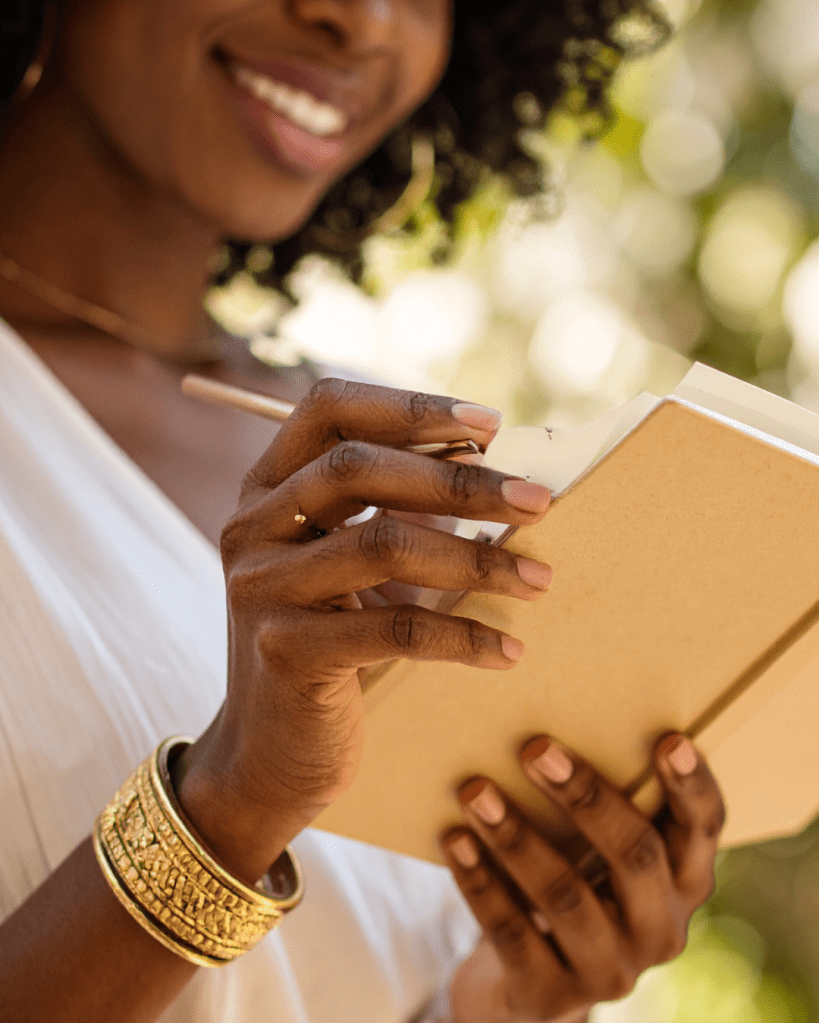
Both fellowships span one year and include dedicated writing time, skill development, community, editing, publication, and a culminating celebration in May 2027.
If you have been waiting for the right moment to commit to your writing, this is it.
If you have been carrying stories that need to be remembered, preserved, and shared, this is your invitation.
Applications for both fellowships close Friday, July 17 at 11.59 pm and both cohorts begin in August. Here is the link to more information and the applications for both. Because of the intensive nature of these programs, applicants may apply to only one fellowship.
If you have questions, contact me at ebony@ayacollectivemn.com.
The urgency of this moment is not rooted in scarcity; it is rooted in possibility. Our stories deserve to be written. Our memories deserve to be preserved. Our communities deserve to inherit a fuller record of who we have been and who we are becoming.
I hope you’ll join us.
With gratitude,
Ebony Aya


Leave a comment