Last year, Aya Collective Publishing issued a call for submissions focused on Black women’s experiences in higher education. Drawing from our research, as well as the high-profile deaths of Black women academic administrators in 2023 and 2024, we sought to create a literary volume that would allow us to tell our stories—in our own ways, on our own terms—about how we have navigated higher education, in order to inspire those coming after us.
Our initial call for submissions yielded only a handful of stories. The political climate surrounding the 2024 presidential election, coupled with challenges in our own personal and professional lives, made it difficult for many of us to chronicle the realities shaping our experiences in higher education. Even as we continued to face the daily challenges of being Black and female in our workplaces and academic programs, it often felt easier to put one’s head down and tunnel through the chaos than to lift one’s head and name it. In response, we reshaped the vision for the project and issued another call earlier this year to meet the need we saw emerging.
As we neared completion of this draft, a few gaps in the writing still remained. Wanting to honor our internal publishing deadline, I issued a last-minute call for submissions earlier this month. Within days, we received 24 responses from Black women interested in contributing to this project.
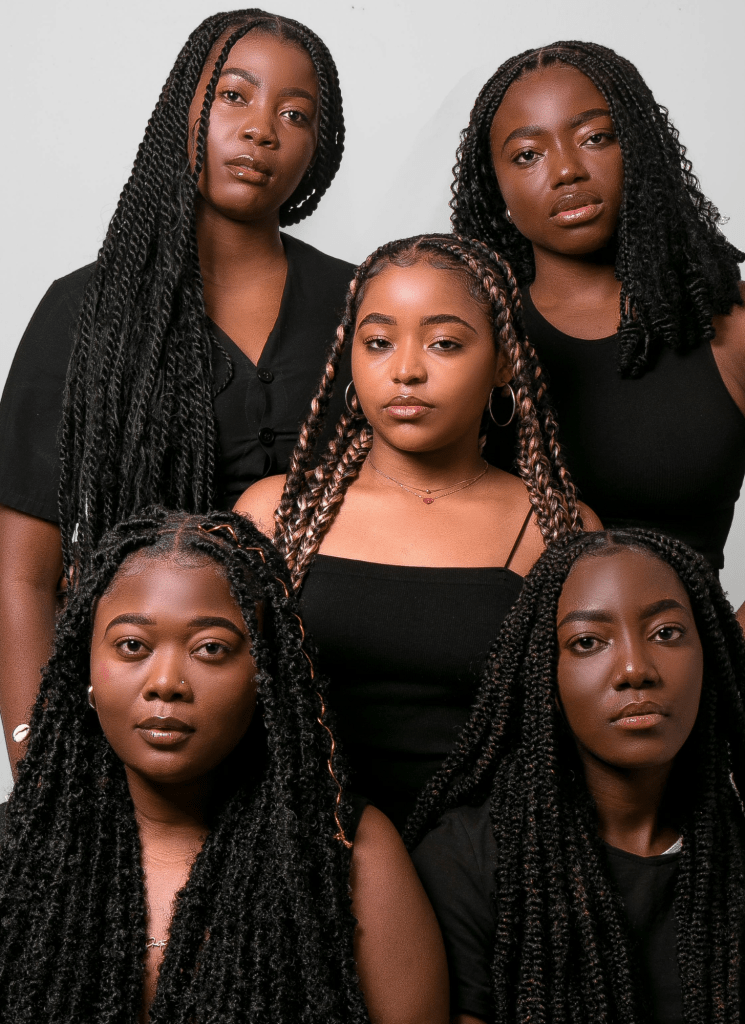
Twenty-four Black women reached out to inquire about the opportunity.
Twenty-four Black women expressed interest in the project.
Twenty-four Black women desired to share their experiences.
This response affirms what we already know to be true:
- There is a deep and ongoing need for spaces where Black women can name, witness, and reflect on our experiences in higher education;
- The moment to tell these stories—with care, honesty, and intention—is now; and
- We are best positioned to tell them together.
All too often, Black women’s experiences—whether in higher education or other institutional spaces—are invalidated. Experiences of gaslighting, marginalization, and being “mammyed” are frequently dismissed as anecdotal, isolated incidents, or framed as a failure on Black women’s part to “go along to get along.” Rarely are our experiences taken seriously, and even more rarely do they rise to the level of concern that prompts institutional accountability or change.
This reality is one of the reasons we work the way we do at Aya Collective Publishing. We believe that a community of Black women telling our stories together is far harder to ignore than any one of us speaking out alone. We are stronger together than any one of us can be on our own.
Equally important, we work this way because we believe we can offer one another the grace, compassion, and resolve we need—forms of strength that higher education has consistently shown itself unable or unwilling to provide. Together, we bear witness to one another’s testimonies and offer perspective, support, and care as we navigate what it means to “make it through”—whether that means continuing within higher education or mustering the courage to carve out new pathways aligned with our passions and sense of higher purpose.
In the coming weeks, final submissions will continue to arrive, and we will move forward with preparing the manuscript for publication in late 2026. Can you tell that we are excited? Contributors will join the researchers and authors who have already shaped this work. And even with these 24 voices, we know this collection represents only a small snapshot of the many Black women in higher education—or with deep ties to it—who carry stories, research, and lived knowledge documenting both their own experiences and those of others.
We invite you to partner with us—not only to elevate this project, but to be part of a collective of Black women committed to truth-telling that incites transformation, joy, and healing in our communities, institutions, and beyond. Our work is rooted in empathy and acts of self and communal care—for Black women, yes, but for Black people as a whole. As our ancestor and teacher Anna Julia Cooper reminds us, “Only the Black woman can say when and where I enter, in the quiet, undisputed dignity of my womanhood, without violence and without suing or special patronage, then and there the whole Negro race enters with me.” The acts of love we undertake are meant to benefit us as Black people collectively.
Here is how you can partner:
- Make a donation to further this work: Donations help ensure that we meet the costs of publishing this text, pay authors, and market our work once it’s complete.
- Become a member: Becoming a sustaining member of the Aya Collective gives participants in the Aya Collective’s work the opportunity to further their involvement. This includes writing and publishing with us, facilitating writing workshops, and playing a key role in advising the direction of the organization. You can make donations or become a member here.
- Be a part of our launch team: Sign up to review and promote the text ahead of publishing. This could include reading the text before it is published, sharing the text with your networks, and connecting with others in your academic institutions to move these stories forward.
We look forward to partnering with you in the New Year and ensuring that the stories in this text get shared.
 Aya Collective Publishing
Leave a comment